Your Definitive Guide to the Jewish Calendar for October 2026 (Plus Printable Options!)
Trying to line up your October 2026 plans with the Jewish calendar? Confused by the transition from Tishrei to Cheshvan, or simply looking for a reliable, printable resource? You’ve landed in precisely the right spot.
October 2026 is a fascinating month in the Jewish calendar, marking the tail end of the high holiday season and the beginning of a new month, Cheshvan. It’s a period rich with spiritual significance and daily observances. Getting these dates right, especially for planning ahead, is crucial for many Jewish households and individuals.
Forget the endless searching and confusing online converters. I’m going to walk you through exactly what October 2026 holds in terms of Jewish dates and observances, and then I’ll show you the best ways to get your hands on a clear, accurate, and truly printable Jewish calendar for this specific month. By the end of this guide, you’ll not only have the dates you need but also the confidence to understand and use your Jewish calendar effectively.
Navigating October 2026: Gregorian Dates vs. Jewish Calendar 5787
The Jewish calendar operates on a lunisolar system, meaning its months are based on the cycles of the moon, while its years are aligned with the solar year to ensure holidays fall in their correct seasons. This beautifully intricate system means that Jewish dates “move” relative to the fixed Gregorian calendar we typically use. October 2026 perfectly illustrates this interplay, encompassing the end of the Jewish month of Tishrei 5787 and the beginning of Cheshvan 5787.
This month wraps up the joyous festival of Sukkot, culminating in Shemini Atzeret and Simchat Torah, and then transitions into the less eventful but spiritually significant month of Cheshvan. Knowing these dates helps you plan for synagogue attendance, family gatherings, or simply understanding the rhythm of the Jewish year.
October 2026 at a Glance: Key Jewish Dates & Events
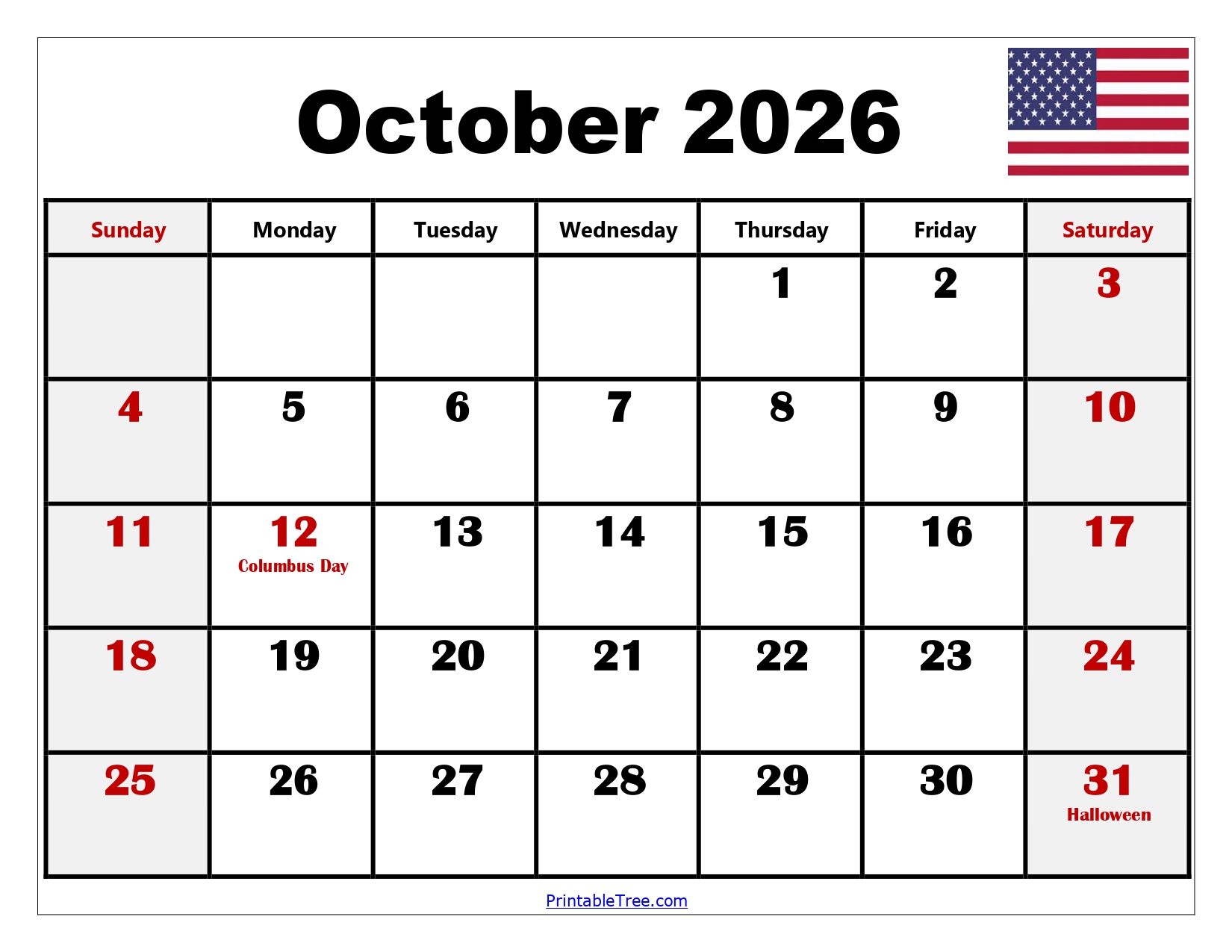
Let’s break down the essential Jewish dates for October 2026, mapping them directly to their Gregorian counterparts. This table will be your go-to reference for planning.
| Gregorian Date (October 2026) | Jewish Date (5787) | Key Jewish Event/Observance | Significance |
|---|---|---|---|
| Thursday, October 1 | 20 Tishrei | Sukkot VI (Chol Hamoed) | Sixth intermediate day of Sukkot, a joyous festival where we dwell in temporary booths (sukkot) to commemorate G-d’s protection in the wilderness. |
| Friday, October 2 | 21 Tishrei | Hoshana Rabbah (Sukkot VII) | The seventh and final day of Sukkot, observed with special prayers and rituals symbolizing a final plea for rain and judgment. |
| Saturday, October 3 | 22 Tishrei | Shemini Atzeret (Diaspora) | A distinct holiday immediately following Sukkot, marking an additional day of celebration and a special prayer for rain (Tefillat Geshem). |
| Sunday, October 4 | 23 Tishrei | Simchat Torah (Diaspora) | The “Rejoicing of the Torah,” celebrating the completion and immediate restart of the annual Torah reading cycle. Marked by dancing with Torah scrolls. |
| Monday, October 5 | 24 Tishrei | (No major observance) | A regular weekday. |
| Tuesday, October 6 | 25 Tishrei | (No major observance) | A regular weekday. |
| Wednesday, October 7 | 26 Tishrei | (No major observance) | A regular weekday. |
| Thursday, October 8 | 27 Tishrei | (No major observance) | A regular weekday. |
| Friday, October 9 | 28 Tishrei | (No major observance) | A regular weekday. |
| Saturday, October 10 | 29 Tishrei | (No major observance) | Shabbat. Last day of Tishrei. |
| Sunday, October 11 | 30 Tishrei | Rosh Chodesh Cheshvan I | First of two days marking the head of the new month of Cheshvan. Special prayers are added to the daily services. |
| Monday, October 12 | 1 Cheshvan | Rosh Chodesh Cheshvan II | Second of two days marking the head of the new month of Cheshvan. |
| Tuesday, October 13 | 2 Cheshvan | (No major observance) | A regular weekday. |
| … to … | … to … | (No major observance) | The remainder of October 2026 falls within the month of Cheshvan, which has no major holidays or fast days. |
| Saturday, October 31 | 20 Cheshvan | (No major observance) | Shabbat. The month of Cheshvan continues into November. |
Understanding the Transition: From Tishrei to Cheshvan 5787
October 2026 is a fascinating month because it bridges two distinct Jewish months: Tishrei and Cheshvan. Tishrei is often considered the most significant month of the Jewish year, packed with the High Holy Days (Rosh Hashanah, Yom Kippur) and the joyous festivals of Sukkot, Shemini Atzeret, and Simchat Torah. By the time October 1st, 2026 rolls around, we are already deep into Sukkot, approaching its grand finale.
- Tishrei (תשרי): The first month of the civil year (and seventh of the ecclesiastical year) in the Jewish calendar. It is known for its intense spiritual period of repentance and joyous festivals. October 2026 begins with the final days of Sukkot.
- Cheshvan (חשון): This month, often referred to as “Marcheshvan” (bitter Cheshvan) because it typically lacks any major holidays or fast days, begins in October 2026. It’s a month of regular daily life, allowing for spiritual reflection and preparation after the intense Tishrei period. The only significant observance is Rosh Chodesh, marking the start of the month.
Rosh Chodesh Cheshvan, which falls on October 11th and 12th in 2026, is a minor holiday celebrated when the new moon appears. Because the preceding month, Tishrei, has 30 days, Rosh Chodesh Cheshvan is observed for two days – the 30th of Tishrei and the 1st of Cheshvan. It’s a time for special prayers, known as Hallel, and a general festive atmosphere, though without the restrictions of a major holiday.
Why a Printable Jewish Calendar for October 2026 is Essential
In our increasingly digital world, you might wonder, “Why bother with a printable calendar?” The answer lies in convenience, tangibility, and a deeper connection to your daily Jewish life. A printed calendar offers unique benefits that digital screens often can’t match:
- At-a-Glance Clarity: A physical calendar on your fridge, desk, or wall provides an immediate, always-on reference. No need to unlock a phone, open an app, or navigate through screens.
- Family Planning: It becomes a central hub for household planning, allowing everyone to see upcoming Jewish holidays, Shabbat times, or specific event dates without constant digital reminders.
- Digital Detox: Sometimes, it’s nice to step away from screens. A printed calendar serves as a practical tool that supports this desire.
- Educational Tool: For children, seeing the Jewish dates alongside the Gregorian dates helps them internalize the calendar system and the rhythm of Jewish life.
- Reliability: Once printed, the information is static. You don’t have to worry about internet access, battery life, or software updates.
- Personalization: A printed calendar gives you space to jot down notes, appointments, or personal observances directly on the dates that matter to you.
For October 2026 specifically, having these key dates readily visible ensures you don’t miss the final days of Sukkot or the start of Cheshvan. It keeps you informed and prepared.
How to Get Your Perfect Printable Jewish Calendar for October 2026
Now that you understand the importance, let’s talk about how to actually get a high-quality, printable Jewish calendar for October 2026. You have several excellent options, ranging from DIY solutions to ready-made downloads or purchases.
Option 1: DIY – Create Your Own Custom Calendar
If you love a personal touch and have specific needs, creating your own calendar is a fantastic route. It allows for ultimate customization and ensures you only include the information most relevant to you.
What You’ll Need:
- A Reliable Source for Jewish Dates: Use trusted online Jewish calendar converters (like those found on Chabad or Hebcal, though I’m not linking directly here) to verify specific dates for October 2026 in your location (especially for Shabbat candle lighting times, which vary by locale).
- Spreadsheet Software: Programs like Microsoft Excel, Google Sheets, or Apple Numbers are perfect for this.
- Word Processor: For formatting and adding text (Microsoft Word, Google Docs).
- Printer: Of course!
Step-by-Step DIY Guide:
- Gather Your Data: Start with the Gregorian dates for October 2026. Then, use an online Jewish calendar tool to find the corresponding Hebrew dates and list all relevant holidays, fasts, and Shabbat times for your location. Pay close attention to the Tishrei/Cheshvan transition we discussed.
- Design Your Layout: Open your preferred spreadsheet or word processor. Create a grid with 7 columns for the days of the week and rows for each week of October.
- Populate the Grid:
- In each day’s cell, enter the Gregorian date (e.g., “October 1”).
- Below the Gregorian date, add the corresponding Jewish date (e.g., “20 Tishrei”).
- Add the Jewish event (e.g., “Sukkot VI”) clearly.
- Consider adding Shabbat candle lighting and Havdalah times for each Shabbat if you observe them.
- Add Personal Touches: Include family birthdays, anniversaries, or local synagogue events. Choose your favorite fonts and colors.
- Review and Verify: Double-check every date and event against your reliable source. An inaccurate calendar is worse than none!
- Print It Out: Print on good quality paper. You might want to experiment with landscape vs. portrait orientation to find what fits best.
This method gives you the most control and ensures the calendar perfectly suits your needs.
Option 2: Download & Print from Reputable Online Sources
Many fantastic websites offer free, ready-to-print Jewish calendars. This is often the quickest and easiest way to get an accurate calendar without starting from scratch.
What to Look For:
- Accuracy: This is paramount. Look for sites known for their Jewish scholarship or clear calendar generation (e.g., major Jewish organizations or well-established calendar providers).
- Format: PDFs are ideal for printing as they maintain formatting. Image files (like JPEGs or PNGs) can also work but might require more adjustment to print nicely. Word documents are good if you want to edit.
- Clarity and Readability: The calendar should be easy to read with clear fonts and a logical layout. Cluttered calendars defeat the purpose of quick reference.
- Inclusion of Key Information: Ensure it includes both Gregorian and Hebrew dates, major and minor holidays, and ideally, Shabbat times for your region.
- Options for Diaspora vs. Israel: Some holidays, like Shemini Atzeret and Simchat Torah, are observed on different days in Israel than in the Diaspora. Make sure you select the correct calendar for your location.
Tips for Downloading and Printing:
- Check the Year: Always confirm you’re downloading the calendar for 2026 (or 5787 in the Jewish year).
- Single Month vs. Full Year: Some sites offer single-month downloads, which is perfect for your specific “October 2026” query. Others provide full-year calendars, which you can then print only the October page from.
- Print Settings: When printing a PDF, use your printer’s “Actual Size” or “Fit to Page” options to ensure proper scaling. Preview before printing to avoid wasting paper.
- Paper Choice: Standard printer paper is fine, but slightly heavier cardstock can make your calendar more durable if it’s going to be frequently referenced.
Option 3: Purchase Pre-Designed Calendars
If you appreciate professional design, beautiful artwork, or additional educational content, purchasing a Jewish calendar is a wonderful option. While it’s not “free,” the value can be significant.
Benefits of Purchased Calendars:
- Aesthetics: Often feature stunning artwork, photography, or calligraphy.
- Additional Content: Many include weekly Torah portions (parashat hashavua), insights into holidays, historical facts, or even recipes.
- Convenience: No need to search or format; simply buy and hang.
- Support for Jewish Artists/Organizations: Your purchase supports creators and institutions.
Where to Find Them:
- Jewish Bookstores: Brick-and-mortar or online Jewish bookstores are excellent sources.
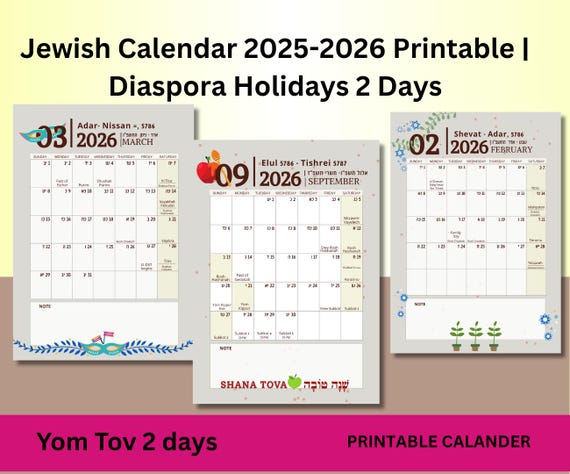
- Online Marketplaces: Websites like Etsy or Amazon often feature independent artists and publishers selling unique Jewish calendars.
- Synagogues and Community Centers: Many Jewish organizations produce their own calendars as fundraisers or community resources.
When purchasing, verify that the calendar specifically covers 2026 (5787) and includes the details important to you, like Diaspora dates if applicable.
What to Look for in a Quality Jewish Calendar (Printable or Digital)
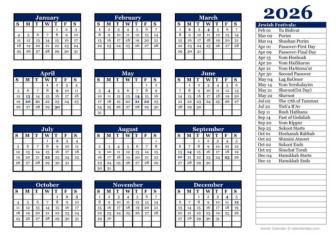
Regardless of whether you download, DIY, or purchase, here’s a checklist to ensure you’re getting a high-quality Jewish calendar for October 2026:
- Accurate Dates: This is non-negotiable. Always cross-reference with a known, authoritative source if you’re unsure.
- Dual Dating System: Clearly shows both Gregorian and Hebrew dates for easy reference.
- Holiday Inclusion: Lists major holidays (like Shemini Atzeret/Simchat Torah) and minor observances (like Rosh Chodesh).
- Time-Specific Information: If applicable, includes Shabbat candle lighting and Havdalah times for your specific location (or at least notes that these are variable).
- Clear Labeling: Jewish holidays should be clearly distinguishable from general holidays (if included).
- Readability: Font size, contrast, and layout should make it easy to read at a glance.
- Diaspora/Israel Distinction: If you live outside Israel, ensure the calendar uses Diaspora dates for holidays where there’s a difference (like the additional day for festivals).
- Printer-Friendly Design (for printables): Not too heavy on ink, good use of white space, and a layout that fits standard paper sizes without excessive trimming.
By keeping these points in mind, you’ll be well-equipped to choose or create a calendar that serves your needs perfectly.
A Quick Look at the Jewish Calendar System
The Jewish calendar ( التقويم العبري or Luach HaShana) is a remarkable achievement, deeply intertwined with Jewish observance and history. Unlike the purely solar Gregorian calendar or purely lunar Islamic calendar, the Jewish calendar is lunisolar. This means:
- Lunar Months: Each month begins with the new moon. Months typically alternate between 29 and 30 days.
- Solar Years: To keep holidays aligned with the seasons (e.g., Passover in spring, Sukkot in autumn), a leap month (Adar I and Adar II) is added seven times every 19 years. This ensures that the lunar year ‘catches up’ with the solar year.
- Epoch: The Jewish calendar counts years from the creation of the world, Anno Mundi (AM), traditionally calculated to be 3760 BCE. So, October 2026 falls within the Jewish year 5787.
This intricate system ensures that festivals like Sukkot always fall in the harvest season, and Passover always coincides with spring, preserving the agricultural and historical significance of these holy days despite the lunar basis of its months. It’s a testament to ancient wisdom and continuous tradition.
Planning Beyond October 2026: Staying Organized
While this guide focuses on October 2026, the principles of finding and using a Jewish calendar extend throughout the year. Once you’ve got your printable October sheet, consider what your needs will be for the rest of 5787 and into 5788.
- Annual Calendars: Many sources offer full-year calendars (Gregorian and Jewish) that you can print or purchase, providing a complete overview.
- Digital Integration: For those who primarily use digital tools, consider syncing a Jewish calendar feed to your Google Calendar, Outlook, or Apple Calendar. This keeps you updated without needing a physical copy for every single date.
- Habit Formation: Make it a habit to check your Jewish calendar regularly, especially as new months approach. This helps you anticipate holidays and observances, allowing for better planning of both your secular and religious life.
By proactively integrating Jewish calendar awareness into your routine, you strengthen your connection to Jewish tradition and ensure you’re always prepared for upcoming events.
Ready to Print and Plan!
You now have a complete understanding of the Jewish calendar for October 2026, including the key observances and the significance of the Tishrei-Cheshvan transition. More importantly, you’re equipped with practical methods to find or create your own perfect printable calendar.
Whether you choose to meticulously craft your own, quickly download a reliable PDF, or invest in a beautifully designed wall calendar, having this information at your fingertips will enhance your planning and connection to Jewish life. Go ahead, get that calendar printed, mark those dates, and embrace the rich tapestry of the Jewish year!
Frequently Asked Questions
What Jewish holidays fall in October 2026?
In October 2026, the Jewish calendar will include the final days of Sukkot (Hoshana Rabbah), followed immediately by Shemini Atzeret (October 3rd in the Diaspora) and Simchat Torah (October 4th in the Diaspora). The month concludes with Rosh Chodesh Cheshvan (October 11th-12th).
What are the Jewish calendar months for October 2026?
October 2026 spans two Jewish months: Tishrei 5787 and Cheshvan 5787. The month begins in the latter half of Tishrei and transitions into Cheshvan on October 11th and 12th.
Where can I find a free printable Jewish calendar for 2026?
Many reputable Jewish organizations and calendar websites offer free printable Jewish calendars. You can often find them as PDF downloads for the full year or specific months like October 2026. Look for sites known for their accurate Jewish date calculations.
Is there a difference between Jewish calendars for Israel and the Diaspora in October 2026?
Yes, there is a difference for some holidays. In the Diaspora (outside Israel), major festivals typically observe an extra day. For October 2026, Shemini Atzeret is observed on October 3rd and Simchat Torah on October 4th in the Diaspora, while in Israel, Shemini Atzeret and Simchat Torah are combined and observed on October 3rd.
How do I convert a Gregorian date to a Jewish date for October 2026?
The easiest way is to use an online Jewish/Hebrew calendar converter. You input the Gregorian date (e.g., October 1, 2026), and it will provide the corresponding Jewish date (e.g., 20 Tishrei 5787). Alternatively, consult a pre-printed Jewish calendar which typically displays both date systems side-by-side.
What makes a Jewish calendar printable?
A printable Jewish calendar is typically formatted in a way that is easy to print on standard paper sizes, often as a PDF document. It should have a clear layout, legible fonts, and include both Gregorian and Hebrew dates, along with Jewish holidays and observances for easy reference once printed.
Why do Jewish holidays sometimes seem to “move” on the Gregorian calendar?
Jewish holidays ‘move’ because the Jewish calendar is lunisolar, meaning its months follow the moon’s cycles, and its years are aligned with the solar year through the occasional addition of a leap month. The Gregorian calendar, however, is purely solar. This difference in calculation means that Jewish dates will shift relative to Gregorian dates each year, ensuring holidays fall in the correct season but on different Gregorian dates.